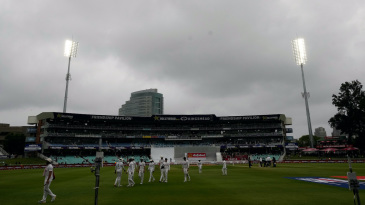
A classic Test match struggle is unfolding at Kingsmead, Durban, where the biggest opponent on the field might not be the opposition, but the early setting sun. With approximately 45 overs already lost across the first three days due to cloud cover, haze, and early Durban sunsets, the opening Test between South Africa and Australia has turned into a tactical race against time. Heading into Day 4, Australia holds a lead of 139 runs in their second innings, but the threat of losing at least 30 more overs over the remaining two days forces both camps into high-stakes strategic calculations. Australia’s Dilemma: Balancing Time and Runs Australia’s goal is clear: build a lead strong enough to secure victory while leaving sufficient time to bowl South Africa out. With the light consistently cutting play short each evening, Australia cannot afford a slow, attrition-based second innings. Aggressive Intent: The brisk opening partnership between Travis Head and Nic Maddinson—who set the tone by pulling his first ball for four after starting on a pair—signals an aggressive approach. Target Lead: Extending the lead toward 350 by batting around 50 overs at four runs an over appears to be the ideal scenario, setting up a declaration midway through Day 4. WTC Points Multiplier: The World Test Championship adds a heavy incentive to push for a win (worth 12 points) rather than settling for a draw (worth 4 points), making time management critical. Nathan Lyon summarized the situation with pragmatic acceptance: "Whether it's cloud or smog or whatever way you want to describe it, it is playing a role, but we can't control it." South Africa’s Counter: Spin, Control, and Opportunity South Africa remains in the fight, boosted by a late-order surge from their lower order that added 87 runs for the final two wickets in their first innings. Batting coach Ashwell Prince anticipates Australia’s aggressive charge and sees it as a double-edged sword. Attacking Opportunities: If Australia takes risks to score quickly, South Africa’s bowlers will have opportunities to pick up quick wickets and restrict the target to around 200–250. Spin into Action: Expect Simon Harmer and Keshav Maharaj to feature heavily on Day 4, using innovative field settings to constrain run rates while inducing mistakes. Kingsmead Chase History: Chasing large totals at Kingsmead is not unprecedented; South Africa famously chased down 335 against Australia here in 2002. The Pink Ball Debate: A Solution Unused The lost overs have reignited discussions over ICC regulations that permit day Tests to be played with a pink ball if both teams agree, allowing play to continue under floodlights when natural light fails. Ashwell Prince’s View: Prince expressed skepticism about universal adoption, citing unequal experience with pink-ball cricket across international teams and reaffirming that "Test match cricket is a red ball." Shaun Pollock’s Perspective: Former South African captain Shaun Pollock, a member of the ICC Cricket Committee, urged teams to adapt: "Don't be scared to use the pink ball. I just believe we should have used the pink ball for the day game." As Day 4 approaches, the spotlight shifts back to the red ball and the Durban sky. Both teams will have to adapt dynamically, knowing that every single over bowled under full daylight could decide the outcome of the Test.
How bad light could shape the South Africa vs Australia Test
A classic Test match struggle is unfolding at Kingsmead, Durban, where the biggest opponent on the field might not be the opposition, but the early setting sun. With approximately 45 overs already lost across the first t